
What Should I Do After Wind or Hail Damages My Roof in Port Huron?
What to check safely, how to limit additional water damage, when to request emergency roof repair, and what Michigan homeowners should document for an insurance claim.
Start With Safety, Then Protect the House
A hard storm can leave you wondering whether the roof is fine, needs a few repairs, or has an opening that could allow water into the house. You do not need to answer that from a ladder.
Begin with a ground-level check. Look for missing shingles, loose metal, fallen branches, gutter damage, and water entering the attic or living space. If you see an active leak or an exposed section of roof, call for help promptly.
Severe weather is a real local roofing concern. The National Weather Service report for September 2 and 3, 2026 documented hail larger than two inches in parts of Southeast Michigan and an EF-0 tornado in nearby Marysville. An earlier Southeast Michigan severe-weather report included roof damage in downtown Port Huron. Those events show why damage should be checked even when the house still looks normal from the street.
Make Sure the Property Is Safe Before Checking the Roof
Wait until the storm has passed and local warnings have ended. Then inspect the property from the ground. Do not climb onto wet, loose, or damaged roofing. Wind can leave shingles partially attached, and hail can make the surface slick even when the rain has stopped.
Leave the Area and Call for Emergency Help If You Notice:
- A power line on the home, roof, tree, driveway, or yard
- A tree or heavy limb resting on the structure
- A ceiling that is sagging, cracking, or holding water
- Movement, popping sounds, or signs that part of the structure is unstable
- Water entering near electrical fixtures, outlets, or the service panel
- Loose roofing, siding, or metal that could fall
If water is coming through a ceiling, keep people and pets away from the area. If it is safe to do so, move furniture and valuables. Use a container to catch dripping water, but do not stand below a bulging ceiling or touch wet electrical equipment.
What Does Wind or Hail Damage Look Like?
Some storm damage is easy to recognize. Other signs are subtle and require a close inspection by someone trained to walk the roof safely. Use this table as a starting point, not a final diagnosis.
| What You Notice | What It May Indicate | Recommended Next Step |
|---|---|---|
| Missing, folded, creased, or lifted shingles | Wind may have broken the adhesive seal, loosened fasteners, or removed part of the roof covering. | Arrange an inspection promptly. Request temporary protection if underlayment or decking is exposed. |
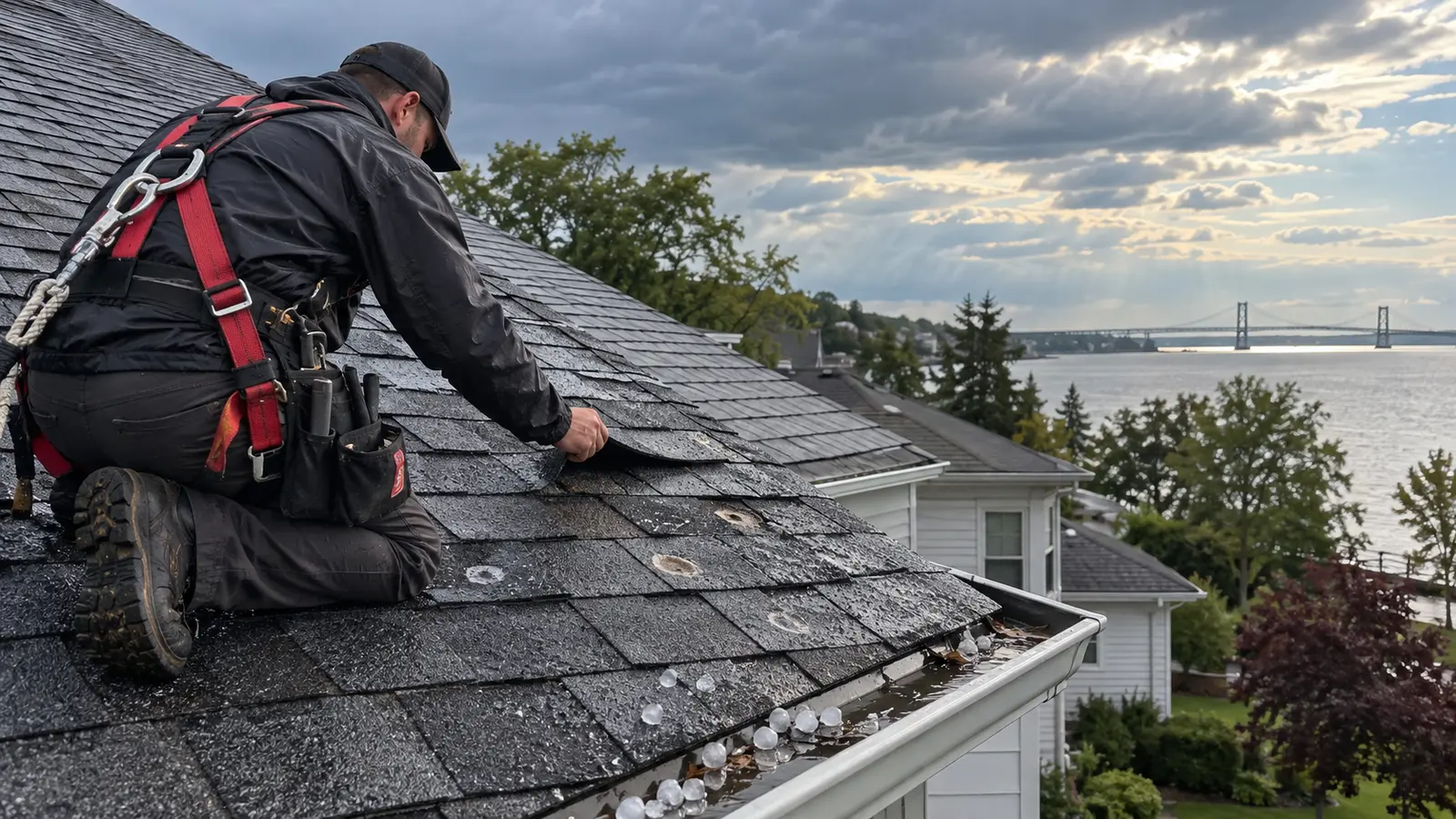
| Dark circular marks, bruises, or exposed fiberglass on shingles | Possible hail impacts that displaced granules or damaged the shingle mat. | Have the roof inspected and photographed. Do not assume every dark spot is hail. |
| Dents in gutters, downspouts, roof vents, or metal flashing | Hail may have struck several exterior components and could have affected the roofing. | Photograph the dents and request a roof and exterior inspection. |
| A large amount of granules near downspouts | Possible shingle wear or recent impact damage. New shingles can also shed some loose granules. | Compare with the roof's age and storm timing. Ask a professional to identify the likely cause. |
| Water stains, dripping, wet insulation, or a musty attic | Water may be entering through damaged shingles, flashing, vents, or another roof opening. | Call for prompt leak detection. Active water entry may require emergency service. |
| Loose gutters, fascia, soffit, or siding | Wind or falling debris may have damaged the roof edge and exterior drainage system. | Keep people away from loose materials and schedule an exterior inspection. |
| A branch or tree resting on the roof | Possible structural, decking, shingle, flashing, and water damage. | Stay out of the affected area and contact emergency services or qualified professionals as appropriate. |
Hail size alone does not determine whether a roof is damaged. Shingle age, impact angle, wind speed, material, roof slope, and previous condition all matter. A reliable inspection should document what is present without treating every mark as proof of storm damage.
Does the Roof Need Emergency Repair?
Call Now
Active leaking, an open hole, exposed decking, a fallen tree, sagging, loose material, or water near electricity requires immediate attention.
Inspect Promptly
Missing shingles, dented metal, loose flashing, gutter damage, or suspected hail marks should be checked before the next storm.
Schedule a Check
No visible damage, but nearby homes were affected or the property experienced strong wind or hail. A documented inspection can provide clarity.
First Response provides 24/7 emergency roof repair in Port Huron for leaks and urgent damage. Temporary work may include covering an opening or controlling water entry until permanent repairs can be planned safely.
What Should You Do After the Storm?
When the Storm Passes: Check for Immediate Danger
Listen for official alerts. Look for fallen lines, unstable trees, loose building materials, active leaks, and sagging ceilings. Keep everyone away from affected areas.
Within the First Hour: Photograph What You Can See Safely
Take wide and close photographs of visible roof, siding, gutter, window, fence, and interior damage. Record the date and approximate time of the storm. Do not climb onto the roof to get better pictures.
As Soon as Possible: Request a Professional Inspection
Ask the contractor to inspect the roofing, flashing, vents, gutters, roof edges, and accessible attic. Request photographs and a written explanation of the findings.
If Water Can Enter: Arrange Temporary Protection
A qualified professional may tarp or secure the damaged area. Keep invoices and receipts for materials, labor, emergency lodging, and other storm-related expenses.
If You May File a Claim: Contact Your Insurer
Have the policy number, storm date, photographs, contractor findings, and temporary-repair receipts ready. Ask what the insurer needs before permanent work begins.
Before Signing: Read the Repair Scope Carefully
Confirm the materials, work areas, price, payment schedule, permits, cleanup, warranties, and how changes will be approved.
What Should You Avoid After Wind or Hail Damage?
- Do not climb onto a wet or damaged roof.
- Do not touch fallen utility lines or anything in contact with them.
- Do not puncture a sagging ceiling while standing below it.
- Do not make permanent repairs before asking the insurer what documentation or inspection it requires.
- Do not discard damaged materials before photographing them and confirming whether they need to be retained.
- Do not sign a vague contract that does not identify the work, materials, costs, and responsibilities.
- Do not assume an insurance claim is approved because a contractor believes the damage came from hail or wind.
- Do not allow storm pressure to replace a careful review of the contractor and agreement.
How Should You Document Roof Damage for Insurance?
The Michigan Department of Insurance and Financial Services disaster guidance says policyholders generally have a responsibility to take reasonable steps to prevent additional damage. Examples include covering a damaged roof and boarding broken windows when it is safe. The department also advises saving receipts and waiting on permanent repairs until the insurer has inspected the damage or tells you to proceed.
Create one folder for all storm information and include:
- Exterior and interior photographs
- Video showing active water entry, when safe to record
- The storm date and approximate time
- National Weather Service alerts or reports for the event
- The roofing contractor's inspection photographs and notes
- Receipts for temporary protection and emergency expenses
- Your claim number and adjuster contact information
- Copies of estimates, emails, letters, and claim documents
- Notes from every phone conversation, including the date and person's name
Michigan DIFS advises homeowners to report a claim through the insurer or agent and keep relevant policy information available. Its insurance claim preparation guidance also links to a claims tracking sheet.
A roofing contractor can inspect, photograph, estimate, and explain the physical work. The insurance company interprets the policy and decides coverage. First Response's wind, hail, and water damage service can help you understand the roof's condition and the repairs being recommended.
Will You Need a Roof Repair or Full Replacement?
A storm does not automatically mean the entire roof must be replaced. A repair may be appropriate when damage is limited, matching material is available, the surrounding shingles remain serviceable, and the roof deck is sound.
Replacement may deserve consideration when damage is widespread, several roof slopes are affected, the shingles are near the end of their useful life, matching material is unavailable, the deck has significant damage, or a proper repair cannot restore the roofing system.
| Condition | Repair May Make Sense | Replacement May Make Sense |
|---|---|---|
| Damage area | Small and clearly isolated | Spread across multiple slopes or roof sections |
| Roof age and condition | Roof is otherwise in good serviceable condition | Shingles are brittle, curling, heavily worn, or repeatedly leaking |
| Material availability | A compatible replacement product is available | Existing material cannot be matched or repaired properly |
| Decking | Deck is sound around the damaged area | Rot, impact, or structural damage extends below the roof covering |
| Long-term value | A durable repair can restore the system | Repeated repairs would continue to add cost without solving wider failure |
If replacement is recommended, review the related guide, How Much Does a New Roof Cost in Port Huron, Michigan? You can also compare First Response's shingle roofing options and metal roofing systems.
Get Your Port Huron Roof Inspected
If wind, hail, or falling debris may have damaged your property, First Response Roofing & Construction can inspect the roof, document visible concerns, explain the repair options, and provide a clear estimate. For an active leak or exposed roof area, call for emergency service.
Request a Roof Inspection Call 1 (810) 294-5009Frequently Asked Questions About Wind and Hail Roof Damage
What should I do first if hail damages my roof?
Make sure everyone is safe, stay off the roof, and photograph visible damage from the ground. Check the attic and ceilings for water. If water is entering or roofing is exposed, request emergency service. Contact your insurer promptly if you may file a claim.
How can I tell whether wind damaged my shingles?
Possible signs include missing shingles, lifted edges, creases, loose ridge caps, displaced flashing, and pieces of roofing in the yard. Some broken seals are difficult to see from the ground, so a professional inspection may be needed.
Can a roof be damaged by hail without leaking right away?
Yes. Hail can displace granules, bruise shingles, damage flashing, or weaken roofing without causing immediate interior water. The problem may become visible later, which is why timely documentation and inspection are useful.
Should I call a roofer or my insurance company first?
If there is an emergency, call for safe temporary protection first. If you may make a claim, notify the insurer promptly as well. A roofer evaluates the physical damage and repair scope. The insurance company decides what the policy covers.
Should I let someone tarp the roof before the insurance inspection?
Reasonable temporary protection may be needed to prevent more damage. Photograph the area first when it is safe, use a qualified professional, keep receipts, and ask the insurer what documentation it requires. Avoid permanent repairs until the insurer inspects or approves the work.
Does homeowners insurance cover wind and hail roof damage in Michigan?
Many policies cover damage caused by wind or hail, but coverage is not automatic. The policy type, exclusions, deductible, roof condition, cause of loss, and claim findings matter. Review the declarations and contact the insurer for an explanation.
Does hail damage mean I need a completely new roof?
No. The appropriate scope depends on how much of the roof is damaged, the material, roof age, repairability, deck condition, and insurance findings. Some roofs need localized repair, while widespread damage may support replacement.
How soon should I have the roof inspected after a Port Huron storm?
Request immediate help for active leaking, exposed roofing, a fallen tree, sagging, or loose material. For suspected damage without an active emergency, schedule an inspection promptly so conditions can be documented before another storm causes additional problems.
Sources and References
- National Weather Service: September 2 and 3, 2026 Severe Weather and Detroit Tornado
- National Weather Service: July 20, 2023 Southeast Michigan Severe Storms
- Michigan DIFS: Disaster Preparedness and Property Damage Guidance
- Michigan DIFS: Tornado and Severe Storm Insurance Information
- Michigan DIFS: Insurance Claim Preparation Guidance
- FEMA: How to Document Damage After Severe Weather