Roof Planning
Can You Replace a Roof in Michigan’s Cold Weather?
What Port Huron homeowners should ask about weather windows, material handling, sealing, and temporary protection before scheduling a late-fall or winter project.
The short answer
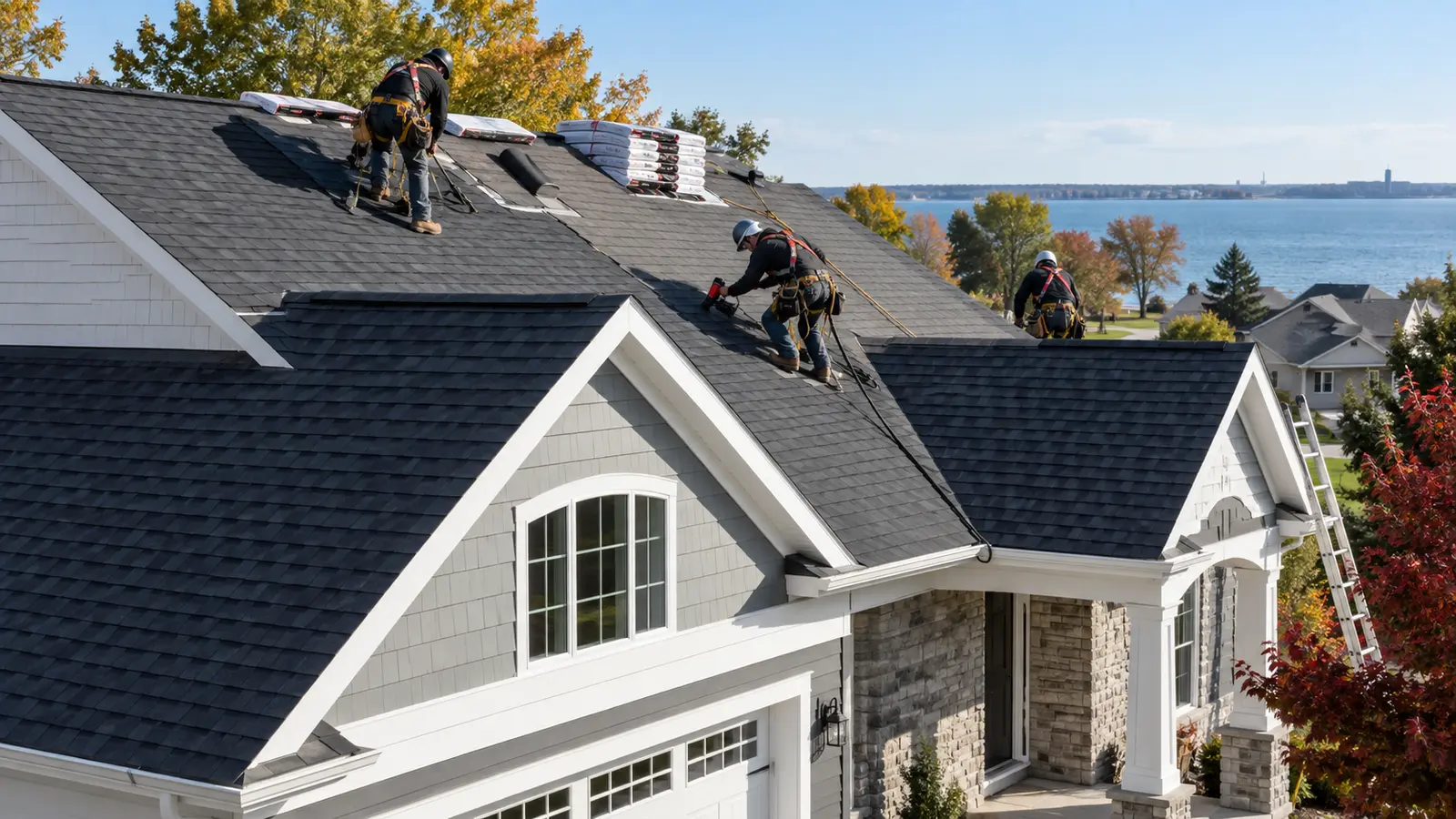
Yes, a roof can sometimes be replaced during Michigan’s colder months. The decision depends on safe working conditions, a suitable weather window, dry decking, and the installation requirements of every product in the system. There is no single temperature rule that applies to all roofs.
The calendar does not decide whether your roof is ready
A leaking roof does not become safe simply because spring is several months away. Equally, a dry roof with a planned replacement is not a reason to begin tear-off during unsuitable weather. The first decision is what protection the home needs now; the second is when the permanent work can be completed correctly.
First Response’s existing website advertises year-round roofing. That describes its service offering, not a promise that every Port Huron roof can be installed on any November or January day. Ask about your property, roofing material, and available schedule before making arrangements for delivery or time off work.
Why cold weather changes the installation plan
Asphalt shingles can become less flexible in the cold, and their adhesive strips may take longer to seal. CertainTeed’s explanation of polymer-modified shingles describes how some products retain greater cold-weather flexibility. That does not remove the need to follow their installation instructions or confirm local availability.
Underlayment, membranes, sealants, and adhesives have their own requirements. A shingle that can be handled in cold weather does not automatically make every component suitable for the same conditions.
Product-specific instructions
Ask which exact shingle and underlayment will be used and how the contractor will follow their cold-weather requirements.
Sealing and handling
Ask how bundles will be stored and handled, whether hand sealing is required, and how unsealed shingles will be protected from wind.
For example, Owens Corning’s Duration instructions contain specific cold-weather precautions. They illustrate why the selected manufacturer’s instructions matter; they are not a specification for another brand or a statement that First Response installs that product.
Conditions to discuss before tear-off
| Condition | Why it matters | What to ask |
|---|---|---|
| Rain, snow, frost, or ice | The deck and working surface must be suitable for installation and safe access. | What conditions trigger postponement? |
| Cold materials and sealants | Handling and adhesion requirements vary by product. | How will materials be stored and installed? |
| Shorter daylight and changing weather | The amount opened at once must fit the available working window. | How will exposed areas be protected before the crew leaves? |
| Hidden deck damage | Tear-off can reveal work that was not visible from outside. | How are repairs documented, approved, and protected? |
In the Port Huron area, ask who will make the morning weather decision and how you will be notified. A reasonable plan allows the crew to postpone when site conditions are unsuitable rather than treating the original appointment as a guarantee.
Put these details in the project conversation
- The exact roofing system and its installation instructions.
- Who evaluates the deck’s condition before new materials are applied.
- How much roof will be opened at one time.
- The plan for overnight or unexpected-weather protection.
- Whether cold-weather sealing is required and how completion will be documented.
- Access for deliveries, debris removal, and keeping entrances usable.
- How weather delays affect the schedule and payment milestones.
- What workmanship and manufacturer warranty terms apply to the proposed installation.
If you are comparing proposals, keep the same scope in view. Our roof cost guide explains estimate components; this article is about installation conditions, not seasonal price promises.
When temporary protection may be the next step
If water is entering and the roof cannot be replaced safely that day, ask a qualified roofer about temporary protection and its limitations. A temporary measure needs a follow-up plan; it should not quietly become the permanent solution.
For a dry roof, a condition assessment may support scheduling a later weather window. For an actively leaking roof, call about emergency repair rather than assuming you must wait for warmer weather. If you are still deciding whether replacement is needed at all, use the repair-versus-replacement guide first.
Frequently asked questions
Is 40°F a universal minimum for roofing?
No. Different products have different requirements, and temperature is only one condition. The chosen shingles, underlayment, adhesives, roof surface, and weather forecast all matter.
Will winter installation void my warranty?
Do not assume either outcome. Ask the contractor to identify the applicable product instructions and warranty terms and explain how the work will comply.
Is a winter roof always cheaper?
No seasonal discount is promised here. Ask for a written estimate based on the actual project and any extra protection or handling it requires.
Can a metal roof be installed in any weather?
No. Metal systems also have product requirements, accessories, weather limits, and worker-safety considerations. Discuss the complete system rather than only the panels.
First Response Roofing & Construction
Discuss a realistic cold-weather roofing plan
Call First Response Roofing & Construction about your roof’s condition and timing. Its shingle roofing team can discuss a proposed system and estimate; the weather and site assessment determine when work can proceed.
Call (810) 294-5009Explore this serviceSources and further reading
Sources checked November 12, 2026. General guidance; the appropriate work depends on your property and roofing system.